

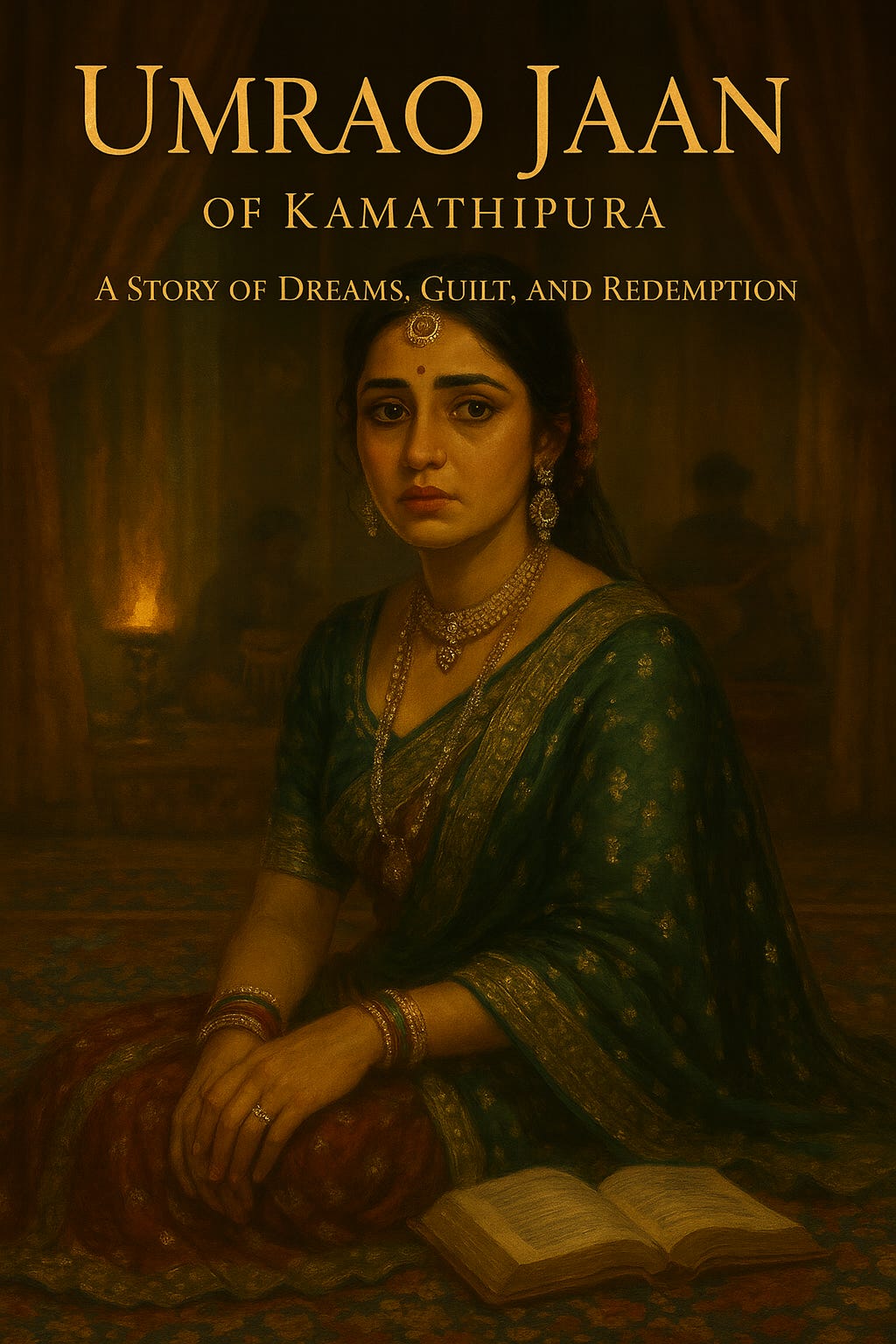
Umrao Jaan of Kamathipura (5/5)
Fifteen years later, Paro’s world collides with her past. An unexpected visitor breaks her silence, unveiling some truths of her past life

Part 5: The Reunion
Strength, Weakness, and the Cruelty of Systems
Till now…
Saathvi’s innocent dream of meeting her idol in Mumbai turned into a nightmare. What began as a playful train ride with Sandya ended in tragedy when Sandya fell from the train. Consumed by guilt, Saathvi never returned home and instead trusted a kind-looking old man, who betrayed her and sold her into Kamathipura.
Years passed. Paro, her beauty and wit hiding her inner sorrow. Despite the harshness of her world, she clung to her books, still dreaming of the lawyer she once wanted to be.
And then one day, fate brought her face-to-face with the last person she expected.
Part 1: Umrao Jaan of Kamathipura (1/5)
Part 2: Umrao Jaan of Kamathipura (2/5)
Part 3: Umrao Jaan of Kamathipura (3/5)
Part 4: Umrao Jaan of Kamathipura (4/5)
The Reunion Shock
But as the man turned, her smile collapsed. Her body froze, blood draining, legs trembling. Tears welled and spilled before she could stop them
The man, too, stood stunned, his face pale, breath caught as though his heart had skipped.
For a few seconds, silence pressed between them—two familiar strangers staring, unable to believe.
Her voice broke first, choked and stammering:
“Pa… Papa? Aap… yahan? (Father? You… here?)”
His lips trembled. “Saathvi? Tu… tu zinda hai? (Saathvi? You… you’re alive?)”
She stumbled forward, clutching him, crying uncontrollably, words spilling between hiccups. “I’m so sorry… I’m sorry for everything… for Sandya… Papa, I never meant—”
(Her father stiffened, confusion mixing with shock. He pulled her closer, whispering...)
Father: Saathvi… (Paro is the street name, someone picked, after that Devdas movie)…
Are you saying you’re sorry for Sandya? What are you talking about? She’s alive.
She got married last year and is expecting a child. She stays in the village now.
Saathvi (shaken): No… that can’t be. I saw her… I saw her crushed under the train that day. I saw it with my own eyes. I’m so sorry, Papa…
Father: Yes, the train did run over her, but miraculously, she didn’t get a scratch.
The railway police found her and brought her to us the next day.
Forget about Sandya for now. You should be asking about your mother… about your family.
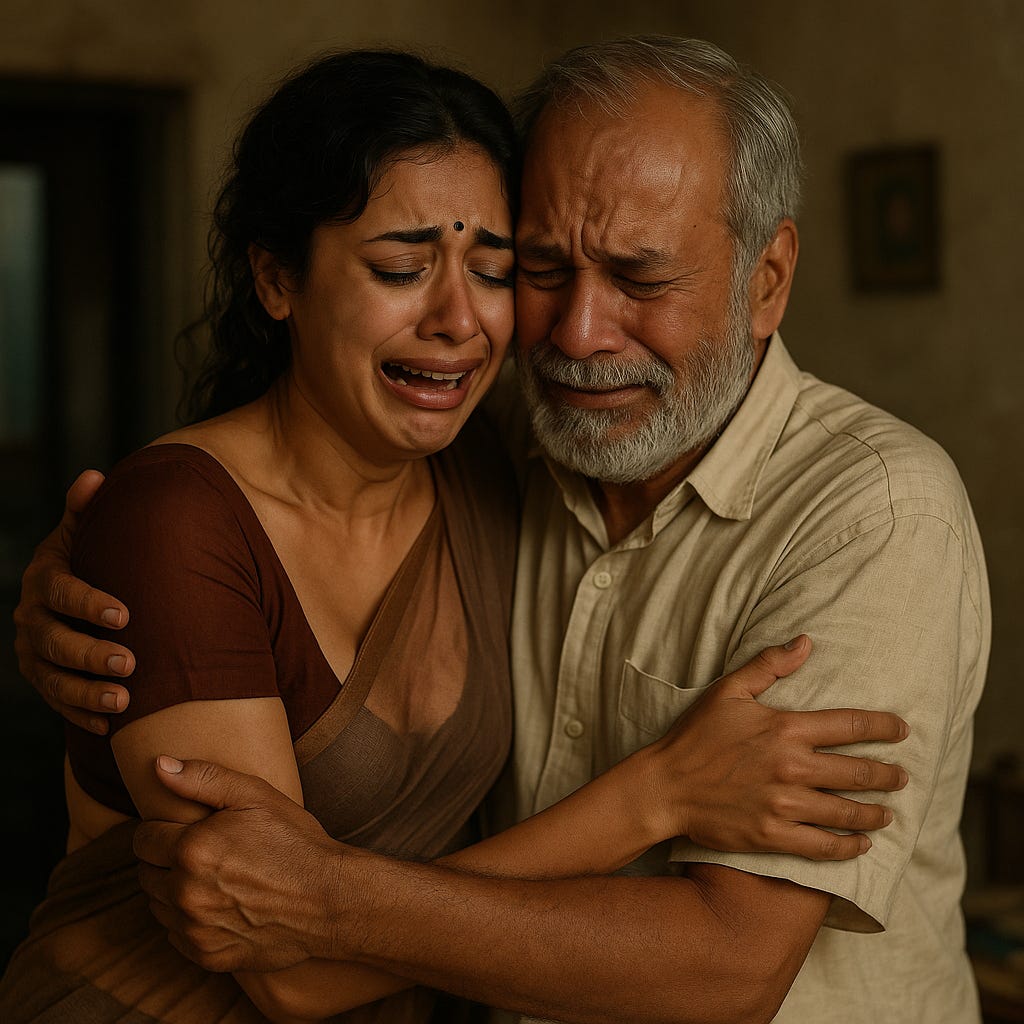
Homecoming Conversation
Father: Your mother lost her mind after you disappeared. Day and night, she only took your name.
Most of the time she was sick, bedridden. Your sisters have been taking care of her. We gave up hope, but she never did. She believed you were alive.
We kept looking — putting up ads, billboards, even stick posters behind buses in every city. No matter what, she wanted her daughter back. No questions asked.
Saathvi (tears welling): I’m sorry, Papa… I’m sorry you had to find me here.
Father (voice breaking): No, my Gudiya (doll)… I’m sorry you had to find me here.
Saathvi: That’s okay, Papa. I can understand why you’re here. But you will never understand why I’m here. I can’t come back. Go home, tell Ma… tell everyone… I’m no more.
Note:
It’s strange, but “didi’s” often feel more compassion for the men who visit them than society or their families ever could. Different kinds of men come—usually those deprived of love, discounted by families, labeled as losers by society. For some, these women become unlikely healers of wounds inflicted by so-called civil society.
Father: We tried everything for her. Dozens of psychiatrists, endless medicines. Nothing worked.
The medicines only broke her body more. Her life force is tied to you. She can’t help it. We can’t help it. You are our daughter — nothing changes that.
Saathvi: Papa… I’m no longer Saathvi. The world knows me as Paro now. That can’t be undone. There’s no turning back.
The girl you knew died that day under the train. Not Sandya…me. Saathvi is gone. Even if I stand before her, Ma won’t recognise me. Go back now.
Father (angrily, yet with love): You stupid girl. You were stubborn then, and you’re stubborn now. You don’t know what children mean to their parents.
You never gave us a chance…not then, not now. That’s who you are, my daughter. Nothing changed. Come home, my foolish piglet.
We’ve been waiting for you for fifteen years. The rest, we’ll figure out together as a family.
Saathvi (whispering): Okay, Papa… I’ll come. But first… let me pay Amma her share of the money.
— The End —
The story showed us shattered illusions.
Saathvi wasn’t as strong as she believed.
Sandya wasn’t as weak as she thought.
Parents weren’t as unforgiving as Saathvi imagined.
The old man wasn’t kind, only a mask for society’s cruelty.
Amma wasn’t merciful, only another sufferer shaped by a broken system.
The contrast of these lessons sharpened the tragedy: every belief was tested, every truth inverted.
Lessons to be learned
Saathvi (Paro)
Burnt by her own imagination and recklessness.
Couldn’t separate fantasy from reality — and paid the cost.
Should have trusted her parents’ love instead of running away from guilt.
Lesson: Guilt is heavy, but running from it creates chains worse than the mistake itself.
Sandya
Mistook admiration for wisdom. Thought Saathvi was “cooler,” when in truth, her own groundedness was strength.
Blind trust in others, without questioning, can cost everything.
Lesson: Sometimes...the person whom we admire alot is in reality they are very different. Its we create an image about them. So always check with reality
Father
Represents forgiveness and unconditional love.
Teaches that parents suffer silently, carrying burdens
Lesson: Patience and forgiveness can rescue even the most broken ties.
Mother
Her refusal to give up, despite illness, proves the spiritual tie between mother and child.
Even when society, logic, and hope give up, a mother’s instinct doesn’t.
Lesson: Love can outlive logic — but it also destroys the one who clings too hard.
The Old Auto Driver
Pretended to be kind, but preyed on Saathvi’s vulnerability.
He represents how exploitation works in society: it doesn’t come with violence at first, but with false comfort.
Lesson: Not every helping hand is genuine — some masks hide the darkest intentions.
Amma (the brothel Madam / Captor)
Shows how survival in harsh systems hardens people
She embodies society’s cruel face — one that consumes broken souls, yet inadvertently shapes them.
Lesson: Cruel systems feed on weakness, but even within them, strength and identity can survive.
Disclaimer: This is a fictional story. Characters are imaginary, and place descriptions are creative. Any resemblance to real people or events is purely coincidental.
Relevant Blogs:-

Heartbreaking 💔😢
I read the whole series; the turn of events was very riveting. It's so disheartening how Saathvi blamed herself for Sandya's death and how her life changed completely with the turn of events. Nevertheless, I'm happy she reunited with her family and the weight of Sandya's death was off her too. Looking forward to more of your work!